
For most homes across Surrey and the wider South East, a proper clean once a year keeps a driveway or patio looking after itself. If your surface sits in shade, faces north, sits under trees or takes heavy foot and car traffic, twice a year is closer to the mark. Everything below explains why that is, how to read the warning signs early, and why a light, regular touch beats leaving it for years and then throwing everything at it.
The reason the answer is not simply once a year is our climate. The South East stays mild and damp for a good chunk of the year, and that is exactly what algae, moss and lichen love. They do not need much: a little moisture, a little shade and an undisturbed surface. Left alone, a driveway laid five years ago and never touched will look green and slippery long before the paving itself has worn out. A surface cleaned on a sensible schedule almost never gets to that point.
What Makes a Surface Dirty Faster
Two identical patios on the same street can age at completely different rates. Before you settle on a cleaning schedule, it helps to know which side of that line your paving sits on. The bigger the pile of these factors, the more often you will want to clean.
- North-facing or heavily shaded areas, which stay damp for longer and grow green algae quickly
- Overhanging trees and hedges, which drop leaves, sap and berries that stain and feed moss
- Poor drainage or low spots where water sits and pools after rain
- Heavy use, such as a main driveway with daily car movements or a patio used all summer
- Nearby fences, walls and borders that trap moisture and cut down airflow
- Older or more porous surfaces that hold dirt and organic growth more readily
If you recognise three or four of those, treat once a year as a minimum rather than a target. A shaded, tree-lined, north-facing patio in a damp Surrey garden is working against you all winter, and it will show it by spring.
Block Paving Driveways
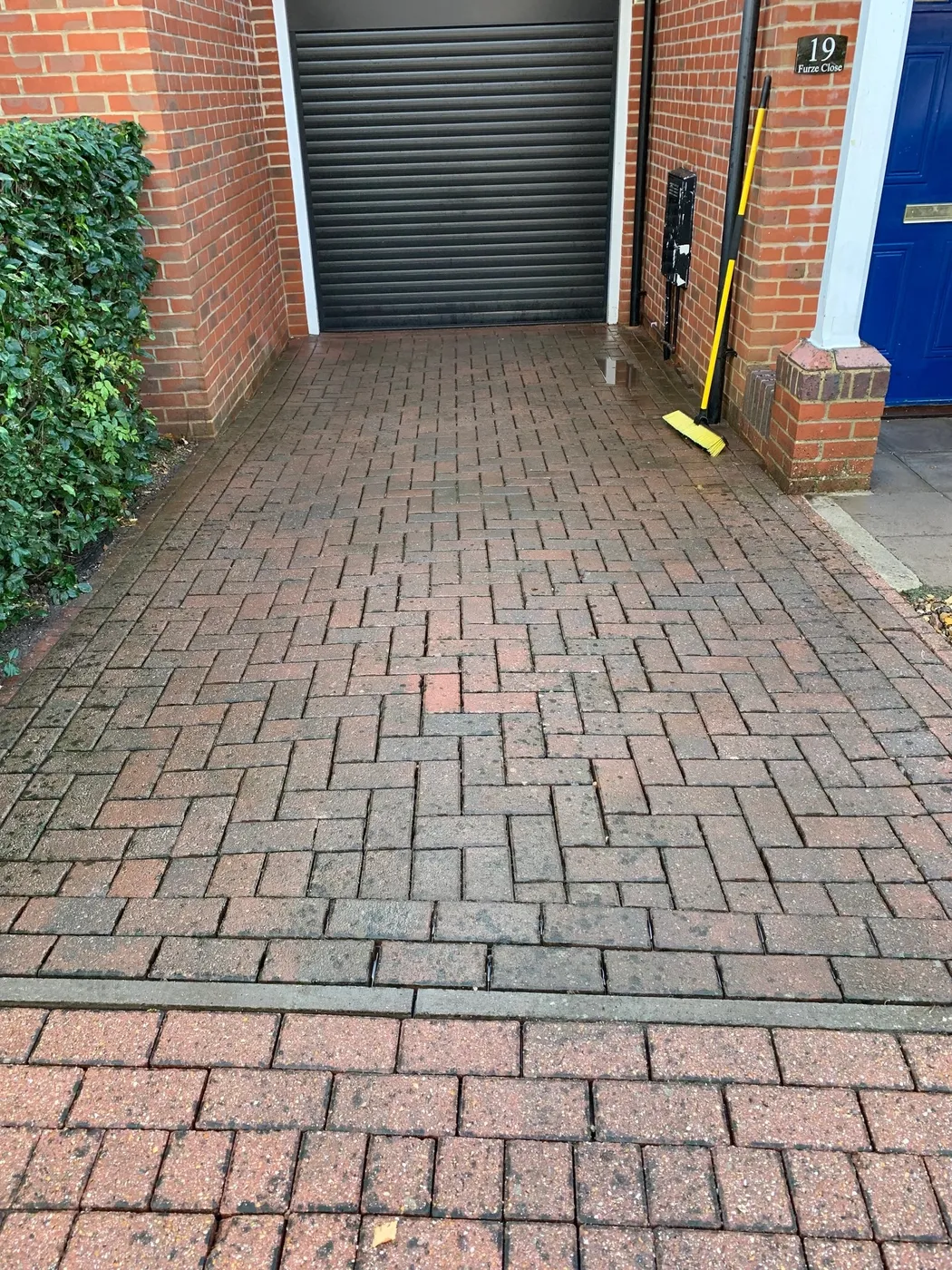
Block paving is the most common driveway surface locally, and a full professional clean roughly once every twelve to eighteen months keeps it in good order. Bring that closer to twelve months if the drive is north-facing, under trees or in constant use. Between cleans, a quick sweep with a stiff brush and pulling any weeds as they appear does more good than people expect.
One detail specific to block paving gets missed a lot. The kiln dried sand in the joints is not decorative. It locks the blocks against each other and gives the surface its strength, and it helps rainwater drain away rather than pool. Cleaning can wash some of that sand out, so it needs brushing back in afterwards. Skip the re-sanding and the blocks start to shift and loosen, and open joints give weeds and moss an easy home. A good clean should always finish with fresh sand worked back into the joints.
You can read more about how we approach this on our driveway cleaning page.
Natural Stone and Indian Sandstone Patios
Indian sandstone is beautiful and hugely popular in South East gardens, but it is porous, which means it soaks up moisture and holds onto organic growth. It is also the surface most prone to black spot, the stubborn dark lichen that hardens and darkens the longer it is left. A yearly clean is sensible for most sandstone patios, and more often if it sits in shade.
The important thing with natural stone is to be gentle. A high-pressure blast can pit and erode the surface and actually make it more porous, so it dirties faster next time. Low pressure combined with the right cleaning treatment is kinder to the stone and, crucially, tackles the growth at the root rather than just stripping the top layer. Catching black spot early, before it hardens in, makes an enormous difference to how well it comes out.
Porcelain, Concrete and Resin
Porcelain is the easiest surface to look after. It is dense and non-porous, so dirt and algae sit on top rather than soaking in. A porcelain patio often only needs a light clean once a year, sometimes less, though shaded joints and grout lines can still green up and benefit from attention.
Concrete, whether slabs or an imprinted drive, is hard-wearing but does hold dirt and go green in damp spots, so an annual clean suits it well. Resin-bound surfaces look after themselves reasonably well but should only be cleaned gently, as heavy pressure can dislodge the stone. For resin, a softer approach once a year is the safe way to keep it fresh.
Why a Regular Gentle Clean Beats an Occasional Heavy Blast
It is tempting to leave a surface for years and then hire a pressure washer to blitz it. The problem is that a pressure blast removes what you can see but leaves behind the spores that cause the greening in the first place. That is why a jet-washed patio can start turning green again within a single wet season, sometimes within months.
A soft wash approach uses low pressure with a biocide treatment that kills the algae, moss and lichen rather than simply moving them around. The surface not only comes up clean, it stays clean for far longer because the growth has been dealt with at the source. Paired with a regular schedule, it means each visit is a light touch rather than a rescue mission, and your paving spends far more of its life looking good. You can see how the gentle method works on our soft washing page.
This is why a maintenance clean is worth having. Rather than waiting until a surface is badly gone, a scheduled visit keeps it consistently clean, protects the money you spent laying it, and removes the slip risk of a green, wet patio in winter. We offer a maintenance option for customers who would rather it was simply handled on a regular basis instead of remembered once every few years.
Signs It Is Time for a Clean
You do not need a calendar to know when a surface needs attention. It tends to tell you. Look out for these.
- A green or black film building up, especially in shaded corners
- Surfaces that feel slippery underfoot when wet
- Dark spots on sandstone that will not brush away, which is black spot setting in
- Moss creeping along joints and edges, or weeds pushing through
- Colours looking dull, grey and tired compared with when the surface was new
- Loose or shifting blocks, a sign the jointing sand has washed away and needs topping up
The earlier you act on any of these, the easier and cheaper the job is. Growth that has hardened in over several years takes far more work to remove than the same growth caught in its first season.
The Surrey and South East Angle
Working across Surrey, Sussex and Kent, the pattern is consistent. Our mild, wet winters give algae and moss a long growing window, and plenty of local gardens are leafy, shaded and tree-lined, which only speeds things up. It is why a surface that might last eighteen months between cleans in a bright, open spot often wants doing every twelve months here. Spring is the natural time for it, clearing off the winter's growth so the surface looks its best through the months you actually use it. Our patio cleaning page has more on how we handle different stone types.
Frequently asked questions
How often should I clean my driveway in Surrey?
For most block paving driveways, a full clean every twelve to eighteen months keeps it in good condition. If your drive is north-facing, sits under trees or is used heavily, aim for once a year, with a light sweep and weed removal in between.
Is pressure washing bad for my patio?
High pressure can damage softer surfaces like natural stone and resin, pitting them and making them more porous. A low-pressure soft wash with a biocide treatment is gentler and lasts longer, because it kills the algae and moss rather than just blasting off the top layer.
Why does my patio go green again so quickly after cleaning?
A pressure wash removes what you can see but leaves the spores behind, so the growth returns within a wet season. A soft wash treatment kills it at the root, which is why the surface stays clean far longer, particularly in shaded or damp spots.
Is a regular maintenance clean worth it?
For most homes, yes. A scheduled clean keeps the surface consistently clean, removes the slip hazard of a green wet patio, and means each visit is a light touch rather than a heavy restoration. We offer a maintenance option so it is simply handled rather than left for years.